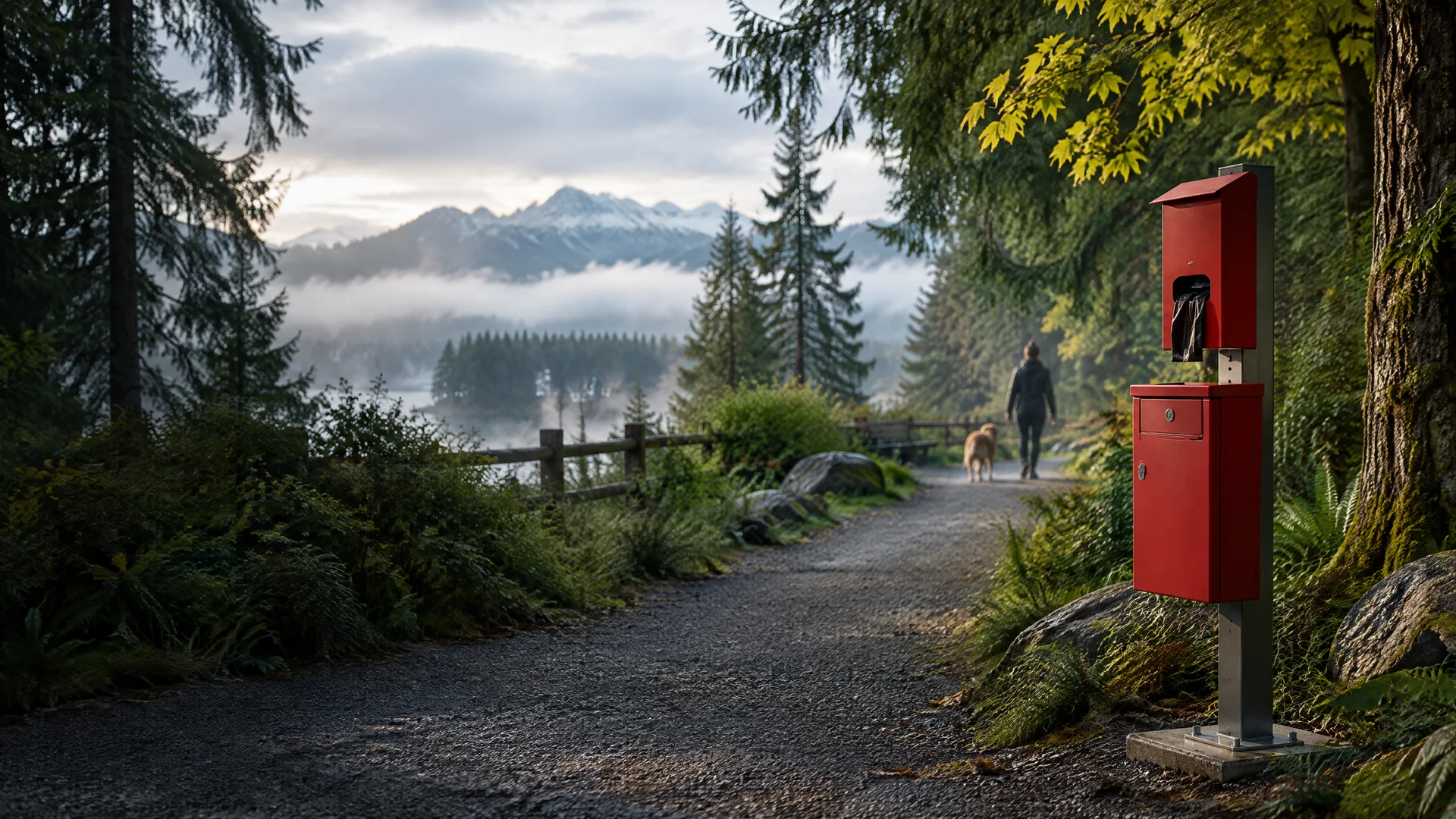
Cleaner parks. Dedicated pet-waste service.
Pookt provides dog-waste collection for parks, trails and public spaces. We work with municipal teams to establish collection schedules, station-care requirements and service reporting suited to each location.
Dedicated municipal dog-waste collection
Build a service plan around your priority locations, expected use and reporting needs. Define the collection schedule, station-care responsibilities and response to issues before service begins.
Each program is set up for the places it serves. A busy off-leash park and a quiet trail head need different attention, so the plan is agreed location by location and reviewed as use changes through the year.
Agreed before service begins
1. Priority locations
The parks, trails and public spaces to include, and where each station sits.
2. Expected use
How busy each location is, and how that changes with the seasons and events.
3. Reporting needs
The records your team, council or residents will want to see.
Dedicated collection
Scheduled collection from designated dog-waste stations at your selected parks, trails and public spaces.
- Stations at the locations you choose, from busy entrances to quieter trail heads.
- A regular collection schedule set for each location's expected use.
- Liner changes and bag restocking where they are included in your service.
Clear service responsibilities
Agreed collection schedules, station-care tasks and procedures for access issues, overflow and additional service.
- Collection frequency, including seasonal changes, set out in your service plan.
- Who looks after station cleaning, damage and replacement.
- What happens when access is blocked, a station overflows or extra pickups are needed.
Online service visibility
Review recent pickups, supporting service records and reported issues through your municipal client portal.
- Time-stamped records of each pickup at each station.
- Completion photos and GPS verification, where available.
- Reported issues, and requests for additional bins that Pookt reviews.
Well-run service starts in the field.
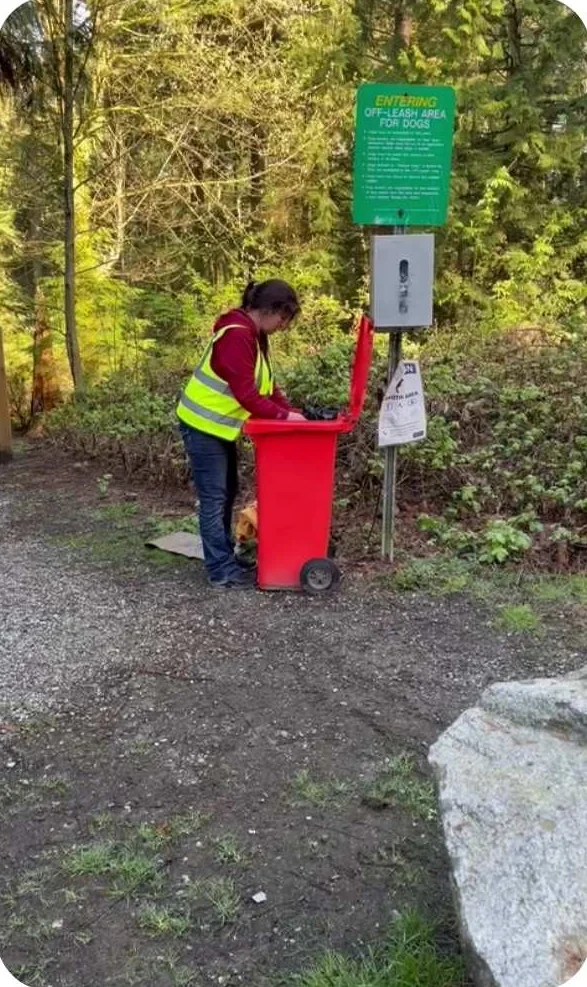
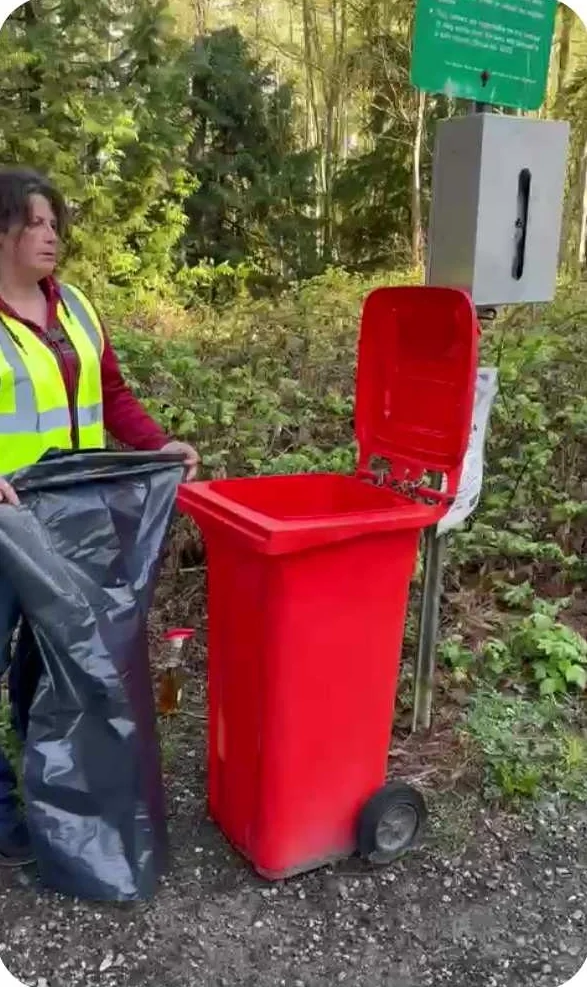
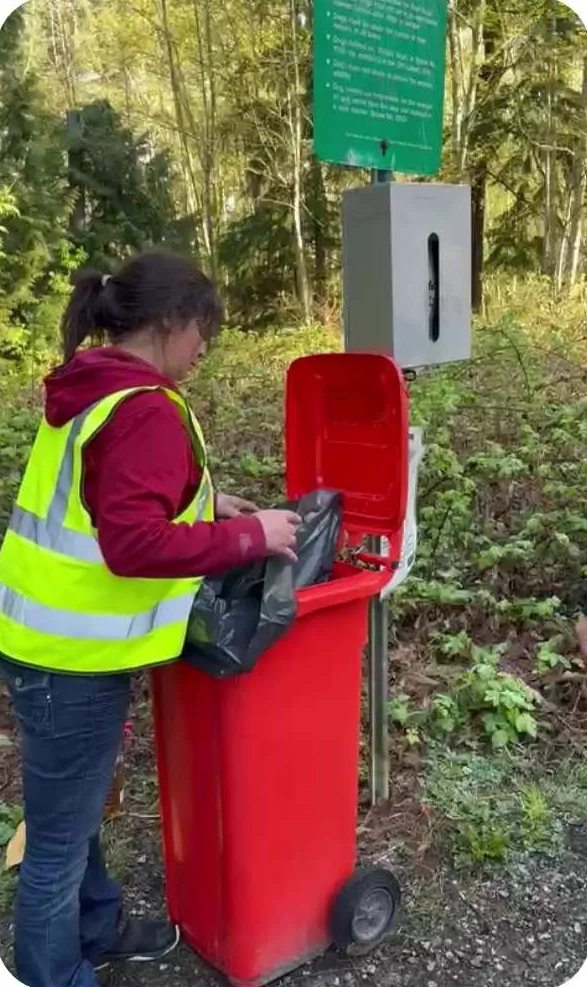
Pookt collection service in the field.
Choose practical locations
Consider entrances, busy routes, collection access and recurring problem areas.
Set the service schedule
Define routine collection, seasonal adjustments and the response to overflow.
Record the work
Capture service dates, site conditions and exceptions, with quantity records where required.
Plan for disruptions
Agree backup arrangements and procedures for spills, cleaning and service issues.
See the service. Stay in control.
Give your department a clear view of pet-waste collection across your parks, trails and public spaces. Pookt’s online client portal brings your bin locations, recent pickups and supporting service records together, so your team can check the work and follow up when needed.
- Attendance
- Physical QR scan
- Location
- GPS verified · 8 m
- Collection
- 2 bags recorded
Check collection activity.
See when each bin was serviced, what work was recorded and any issues needing attention.
Review proof of service.
Open available completion photos and review time-stamped records and GPS verification for individual pickups.
Understand collection needs.
Review recorded bag counts and available weight information to help identify locations that may need a different level of service.
Expand or adjust your program.
Request additional bins at new or existing sites; Pookt reviews each request. When seasonal demand changes, work with Pookt to adjust collection frequency and confirm the updated schedule.
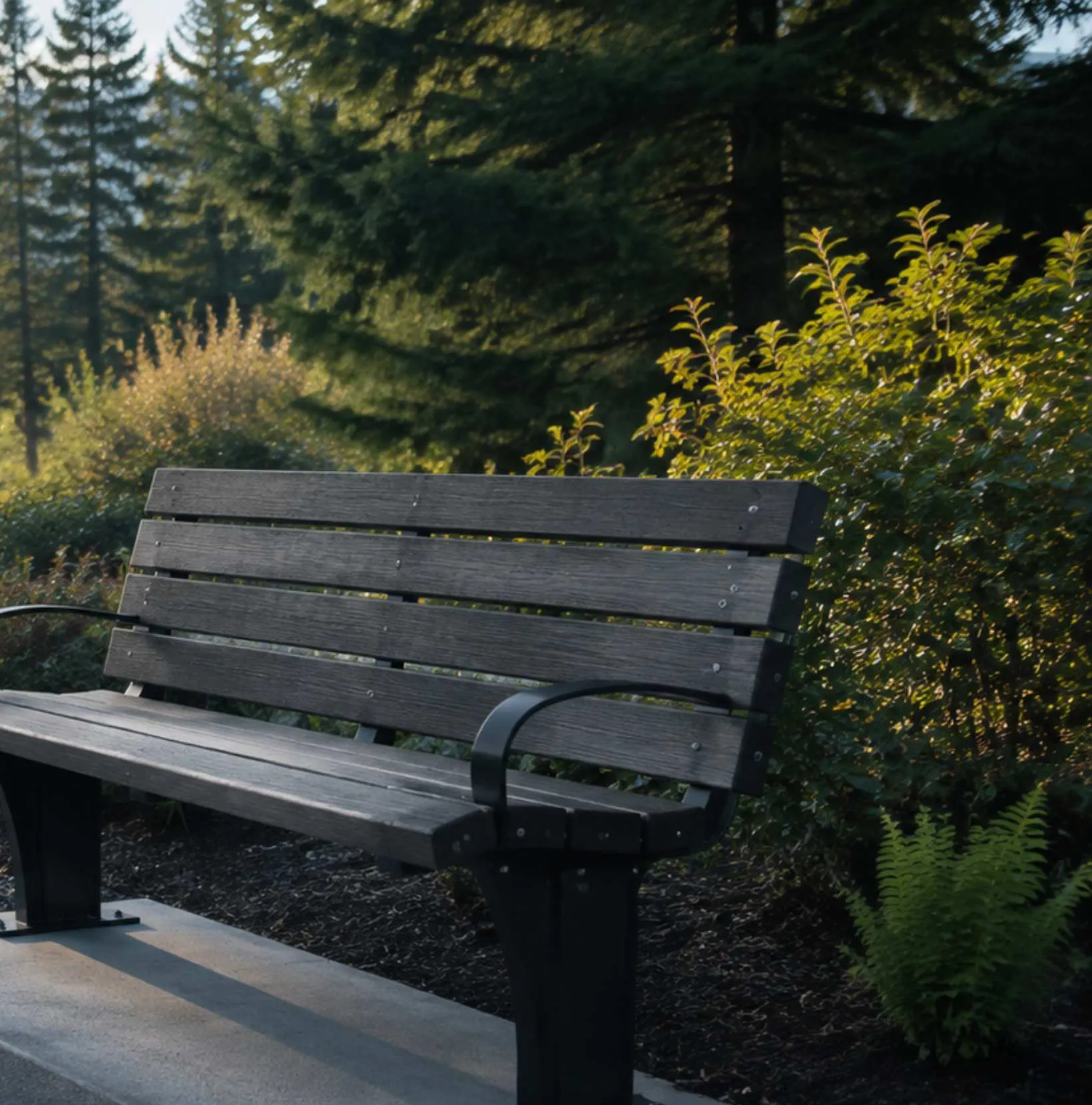
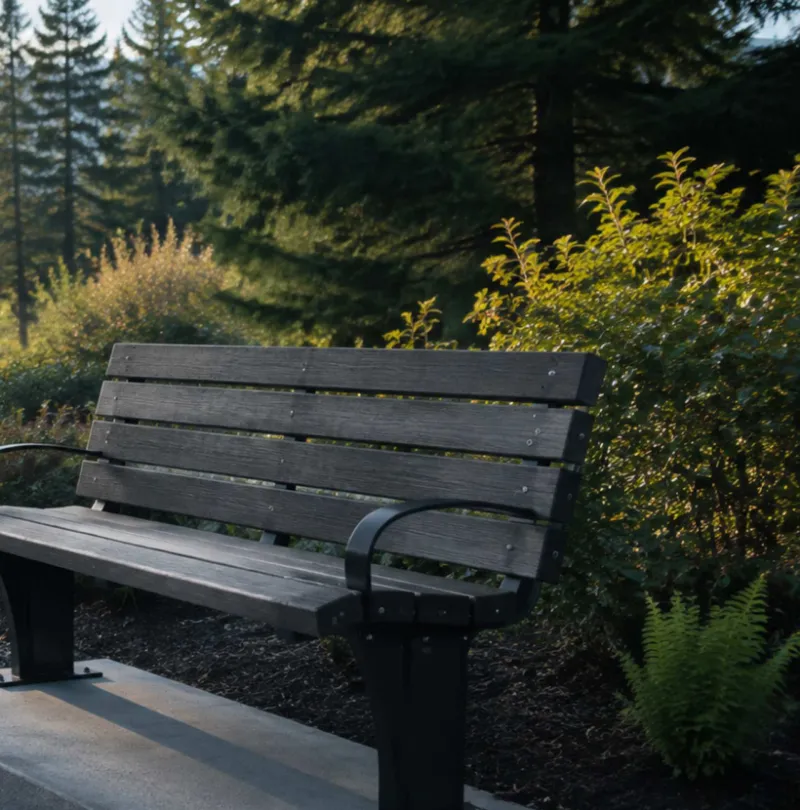
The goal: park bin to park bench.
Pookt is developing a centralized Series 77 processing model to handle collected pet waste and explore whether recovered material could be used in park-bench components.
Development status: The proposed Series 77 system is not yet operational. Processing performance and park-bench applications remain subject to commissioning, permitting and validation.
Illustrative image. The proposed benches are in development.
Planned centralized Series 77 system
The proposed model would provide off-site processing as part of a managed service, without requiring municipalities to own processing equipment.
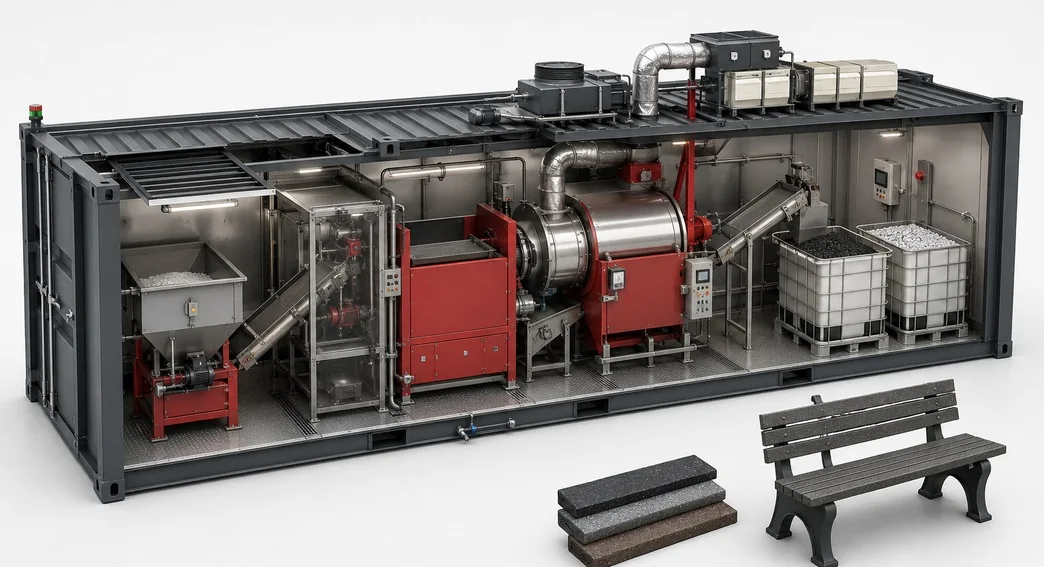
Intended process · in development
Receive
Secure delivery and logged input.
Prepare
Bag management and feed preparation.
Process
Treatment, with operating parameters still to be validated.
Verify
Mass balance and output-quality testing.
Recover
Intended use in park-bench components, if testing qualifies the material.
A place to pause. A way to give back.
We’re developing a way for local businesses to help bring new benches to parks, trails and shared public spaces.
We invite local companies to express interest in sponsoring a future bench. The proposed program would connect business support with practical places for neighbours to rest, meet and enjoy the outdoors, with recognition arrangements agreed for each approved location.
Support a place people share.
Help contribute to seating in a local park, beside a trail or in another approved public space. Bench locations would be selected with the municipality or park operator to suit community needs, access and site requirements.
Recognise your business’s contribution.
Proposed recognition could include a discreet plaque identifying your business’s support. Wording, branding, placement and the recognition period would be agreed in advance and remain subject to the site owner’s sponsorship policies and approval.
Support a second life for recovered plastic.
Express your interest in a project that aims to turn recovered plastic into useful bench components. The final design, material content and suitability for outdoor use will be confirmed through development and testing.
For municipalities and park operators.
Interested in exploring sponsored benches for your community? We’d welcome a conversation about potential locations, bench requirements and local business participation. Any proposal would need to address installation, accessibility, maintenance, ownership and sponsor recognition before moving forward.
Tell us your company or organisation, the community you’d like to support and any location you have in mind.
Start with a pilot. Measure the results.
Assess the approach at selected locations before considering a wider rollout. Establish current conditions, agree service standards and review the results with municipal staff.
- Initial term
- 6 months
- Priority sites
- 10 to 20
- Extension
- Optional 6 months
Proposed pilot scope
- Baseline review of selected sites.
- Scheduled collection and agreed peak-response arrangements.
- Monthly performance reporting.
- Findings and recommendations for future procurement.
Final scope and commitments are set out in the municipal service agreement. Any processing component remains subject to commissioning, permitting and validation.
Resources for municipal teams.
Explore Pookt’s proposed service approach and the regional research informing municipal pet-waste planning.
Need something specific for a council report? Contact Pookt.
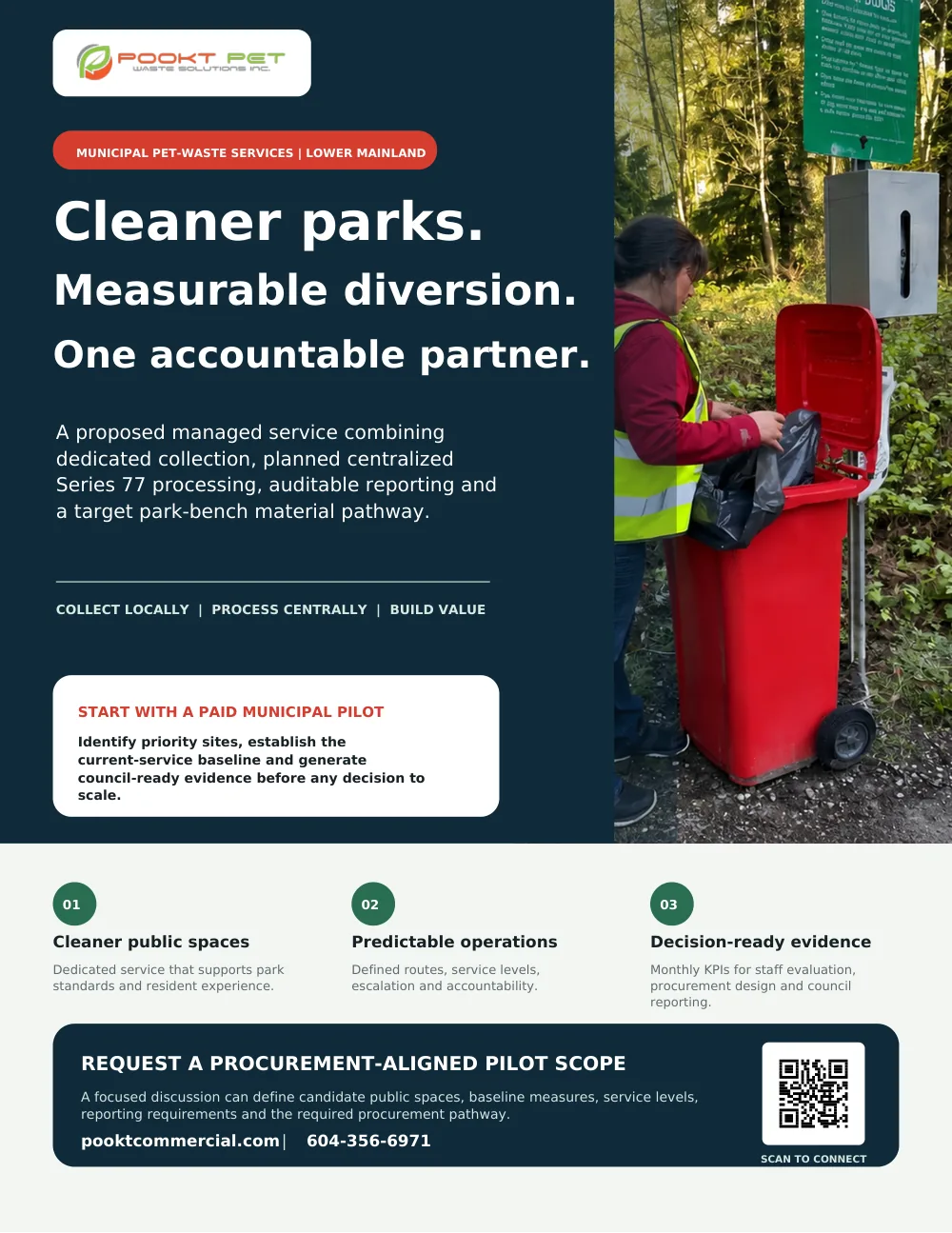
Municipal Pet-Waste Services
Pookt service brochure
A two-page overview of Pookt's proposed municipal service, paid pilot and planned Series 77 processing and material-recovery pathway.
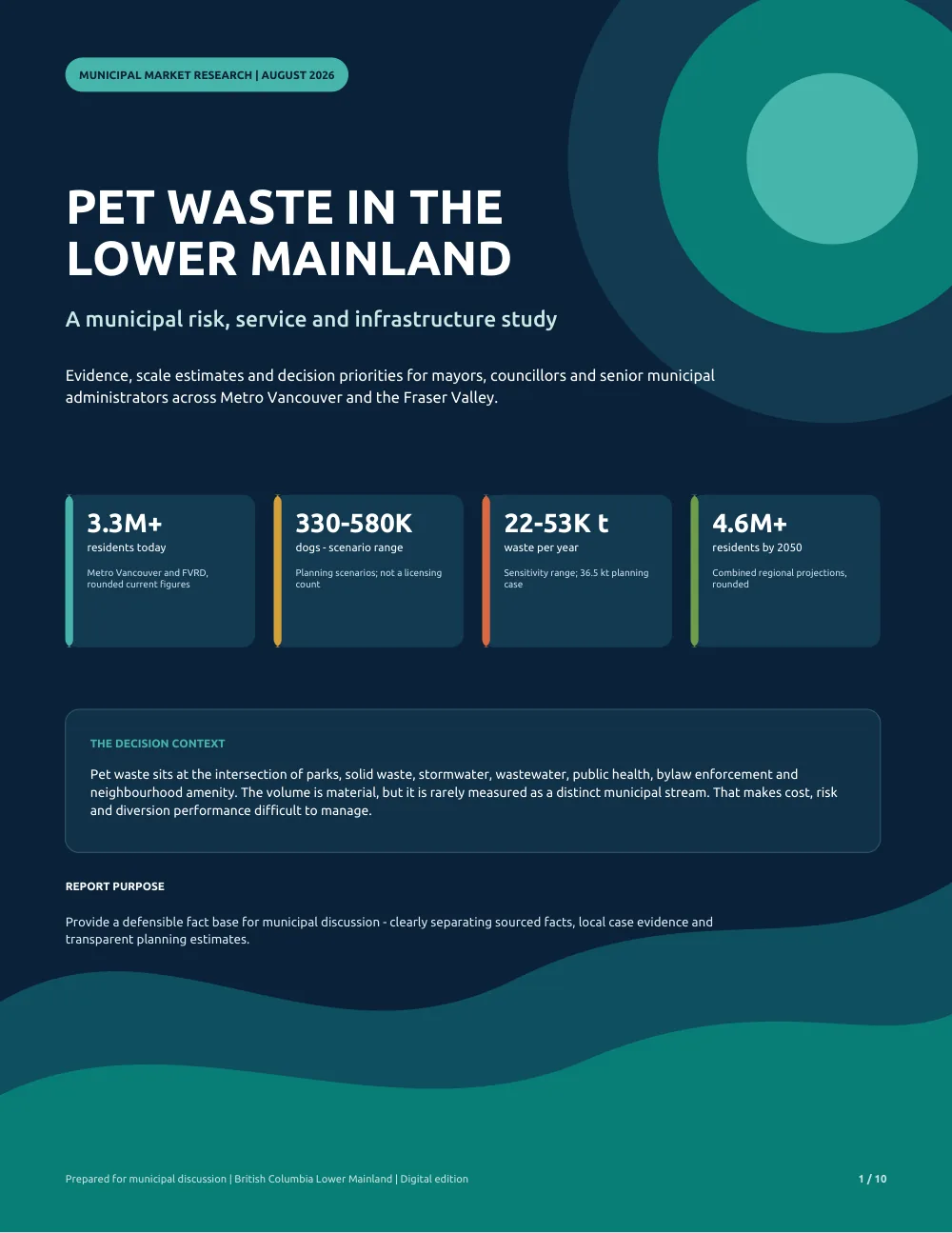
Pet Waste in the Lower Mainland
Municipal market research, August 2026
A 10-page report examining Lower Mainland pet-waste volumes, local collection programs, operational challenges and priorities for municipal evaluation.
Need something specific for a council report? Contact Pookt.